Southbury, C.T.
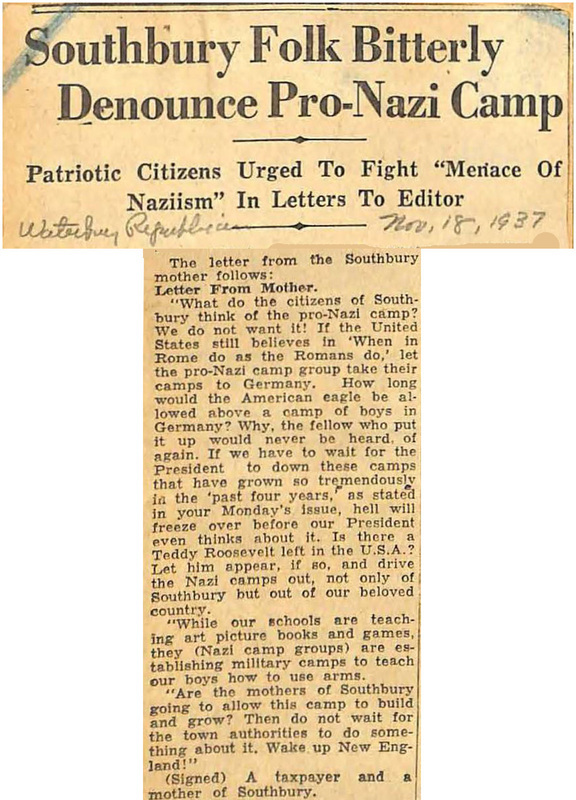
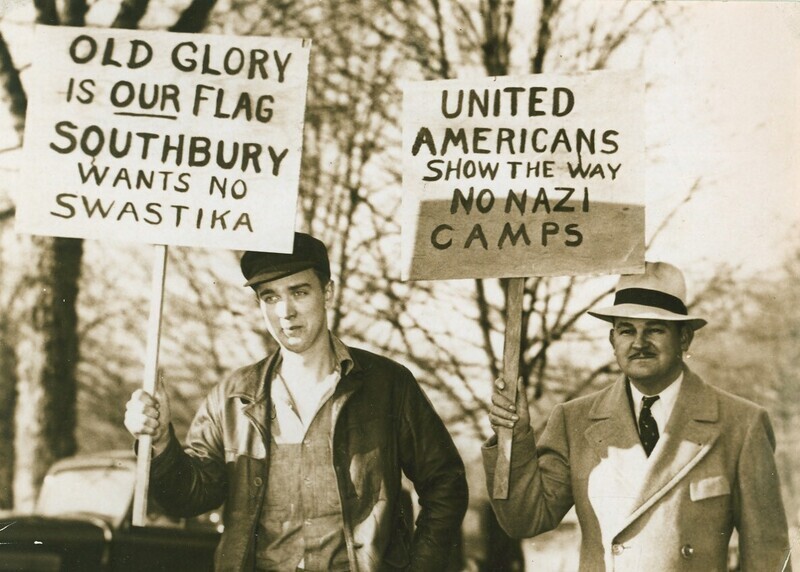
On September 25, 1937, Wolfgang Jung originally from Stamford, CT arrived in Southbury, CT. He purchased 178 acres of land in Southbury Sleepy Hill Road off of Bullet Hill Road on behalf of the German-American Bund, intent on building a Nazi summer camp. The residents of Southbury, led by two ministers and accompanied by local mothers immediately fought back, organizing protests, lobbying the town council and creating a media firestorm that spread across the nation. The camp was going to be named Camp General von Steuben with a capacity for around 1,000 campers. One resident of Southbury and New York, Miss Jennie Hinman, proposed the resolution that “display of an emblem or flag not accompanied with the American flag… in the township… or wearing of… a uniform indicating allegiance to a foreign power… be forbidden.” Rev. M. E. N. Lindsay pastor of South Britain Congregational church, reflected Miss Hinman’s sentiments, citing “we desire to save all mankind rather than condemn it and are not against men but against movements that hurt men.” The rhetoric of Southbury residents displays the disdain and action against the potential of a Nazi summer camp in their small town. And they were not alone. The story of Southbury, CT or “When Southbury Said No to Nazis,” as the local historical society recounts today is a part of a larger discussion on the American Nazi movement and how it aimed to reconfigure American identity through exposure to selective elements of a German (or Nazi) culture.